
Helping Your Child Make Friends at Daycare: Social Skills for Toddlers

One of the best parts of daycare is watching your child begin to connect with other children. But for toddlers and young preschoolers, “making friends” looks different than it does for older kids. It often starts with parallel play, small moments of sharing space, and learning how to handle big feelings.
If your child is in a daycare in Ann Arbor (or you’re preparing to start), here are simple, realistic ways to support early friendships and social skills — without pressure.
What “friendship” looks like for toddlers
Toddlers are still learning:
How to join play without grabbing
How to wait (even briefly)
How to communicate needs and frustration
How to handle “no” or “not right now”
So friendship often looks like:
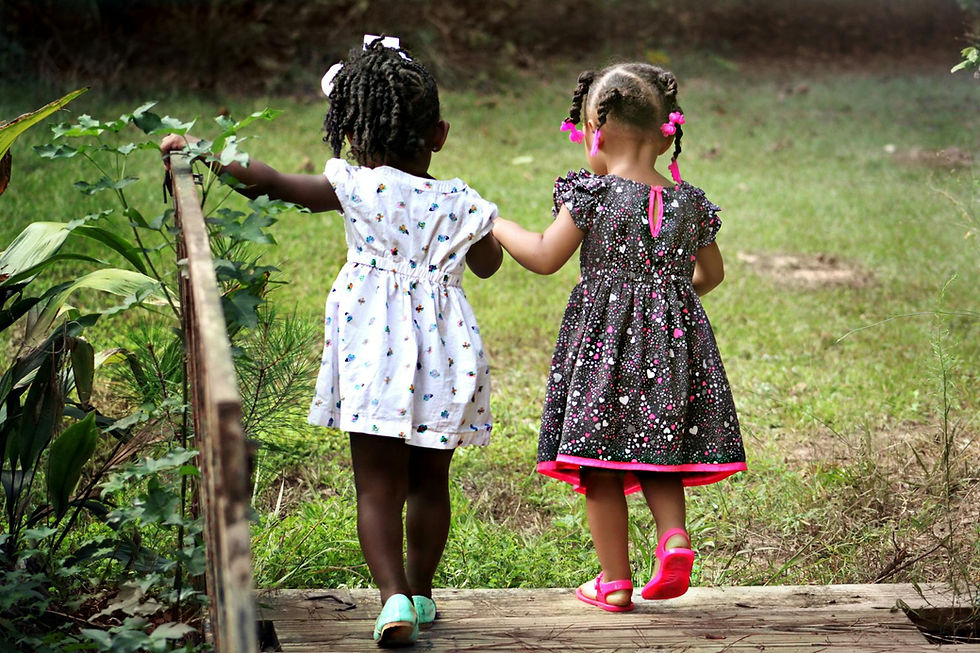
Playing near the same child repeatedly
Copying each other’s actions
Offering a toy (and taking it back 10 seconds later)
Laughing together during movement or pretend play
This is normal and healthy social development.
1. Focus on skills, not “best friends”
Instead of asking “Did you make a friend today?” try:
“Who did you play near today?”
“What game did you play?”
“Did anyone make you laugh?”
These questions match your child’s developmental stage and encourage connection without pressure.
2. Practice “friendly scripts” at home
Toddlers do better when they have simple words ready. Practice these during calm moments:
“My turn?”
“Help please.”
“Stop.”
“I’m using that.”
“Can I play?”
Even if they don’t use the words right away, hearing them repeatedly builds familiarity.
3. Expect conflict (it’s part of learning)
Sharing is hard. Waiting is hard. Toddlers learn social skills by practicing them, and that includes conflict.
A supportive daycare helps kids learn:
Gentle hands
Taking turns with teacher support
Waiting with a short, achievable goal
Repairing after conflict (“Are you okay?” / “Let’s try again.”)
This kind of guidance is part of what we build into our daily routines. You can learn more about how we support social-emotional growth through structure and play on our Approach page.
4. Choose activities that naturally build connection
Some activities make friendship easier because they encourage shared focus:
Sensory bins
Building blocks
Group music and movement
Art stations
Simple pretend play
If your child loves hands-on play, you’ll see lots of examples of these kinds of experiences on our Activities page.
5. Support confidence during transitions
Kids often need extra support socially during:
The first few weeks of daycare
After being home sick
After a long break
During big developmental leaps
If your child is still adjusting to the routine, these posts may help:
Friendships grow over time
For toddlers, friendship is built in small moments repeated consistently: shared routines, familiar faces, and safe guidance from caring adults.
At Squiggle Room, we support children as they learn social skills through play, gentle coaching, and predictable classroom routines. If you’re searching for a daycare in Ann Arbor, explore our Programs and contact us to schedule a tour.
Related reading:

Comments