
The Squiggle Room Approach to Learning Through Play
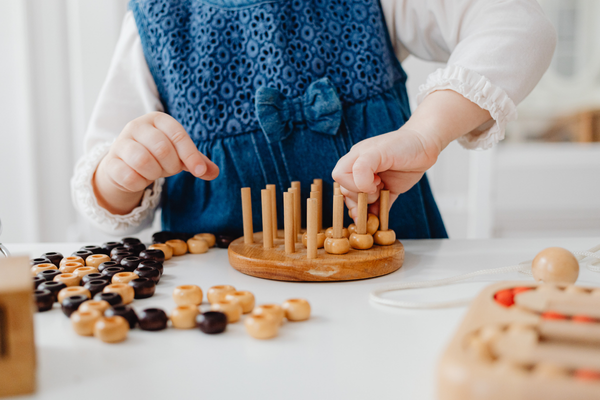
Have you ever watched your child build a tower, paint a picture, or pretend to fly, and wondered how those little moments help them grow?
Parents want a safe, happy place where their kids can follow their curiosity and learn at their own pace. But as a parent, you might wonder: What does learning through play look like? How does everyday play prepare them for kindergarten? And what really matters when choosing the right early learning center?
Below, we’ll explore how play helps your child build big skills, and what to look for when choosing a place where they can thrive.
This article explores our approach to learning through play and why play is such an important part of early childhood development. You'll learn what play-based learning can look like at different ages, how everyday activities support important developmental skills, and what parents can look for when choosing an early learning environment.
What Does "Learning Through Play" Mean?
Play-based learning teaches children age-appropriate skills in a fun way.
Toddlers stacking blocks are learning early math and problem-solving skills.
Painting helps preschoolers develop fine motor control and creative expression.
A group of children acting out a play is practicing language, cooperation, and empathy.
The best classrooms are designed with this in mind: children learn best when they're engaged, curious, and having fun!
Squiggle Room’s Philosophy in Practice
Our approach blends foundations from Reggio Emilia and Montessori education with a strong belief in the value of play:
Child-led exploration. Children have choices in their day, from the activities they gravitate toward to the pace at which they explore.
Teachers as co-learners. Our staff works alongside children, rather than directing them in every decision.
Art, music, and movement, every day. Creative expression is built into our daily rhythm.
Predictable routines. Structure gives children the safety and confidence they need to take creative risks.
Why Does Play-Based Learning Work?
How does play add up to kindergarten readiness?
The short answer is that play is the curriculum, and these same skills support a smooth transition to kindergarten.
Through hands-on activities, children build:
Language and early literacy through storytelling, songs, and conversation
Social-emotional skills through sharing, taking turns, and working through small conflicts with teacher guidance
Problem-solving and early math through building, sorting, and patterns
Confidence and independence through activities they choose to explore and complete themselves
A Typical Day of Play
Every day, classroom activities vary depending on age.
Most days include learning centers, small-group projects, outdoor time, music and movement, and quiet moments for rest and reflection.
Children move through the day with enough structure to feel secure, while reserving the freedom to discover their own interests.
Learning Through Play at Every Age
From our youngest infants exploring sensory materials to our school-age kids tackling more complex projects, play looks different at every stage. We’re here to help each child build confidence, curiosity, and the skills they'll carry forward.
There's always room to grow, discover, and express, as we like to call it "squiggle room."
If you'd like to see our play-based approach in action, we'd love to show you around.
Schedule a tour at Squiggle Room or explore our full curriculum to learn more.


Comments